Box Truck Requirements: Middle-Mile Fleet Guide
Master box truck requirements for middle-mile logistics. Explore CDL thresholds, insurance, cargo securement, and Minnesota compliance for fleet success.
September 26, 2026
The truck is loaded, the overnight appointment is fixed, and the driver is ready to leave. Then someone asks whether the vehicle needs a CDL, whether the insurance certificate meets the broker's requirements, and whether the paperwork in the cab is complete. That last-minute uncertainty is where many middle-mile operations lose time.
Box truck requirements aren't a single checklist. They depend on the truck's rated weight, how the vehicle is used, whether it crosses state lines, who owns the freight, and which shipper or broker is awarding the load. A fleet can meet the federal minimum and still fail a customer's onboarding review because its insurance, equipment, records, or driver process doesn't meet commercial expectations.
Defining the Operating Context for Box Trucks
A dispatcher should identify the operating context before assigning a driver or accepting a route. A box truck moving a company's own goods within a limited local area doesn't necessarily face the same obligations as a carrier hauling another party's freight across state lines. The vehicle may look identical, but the compliance file can be very different.
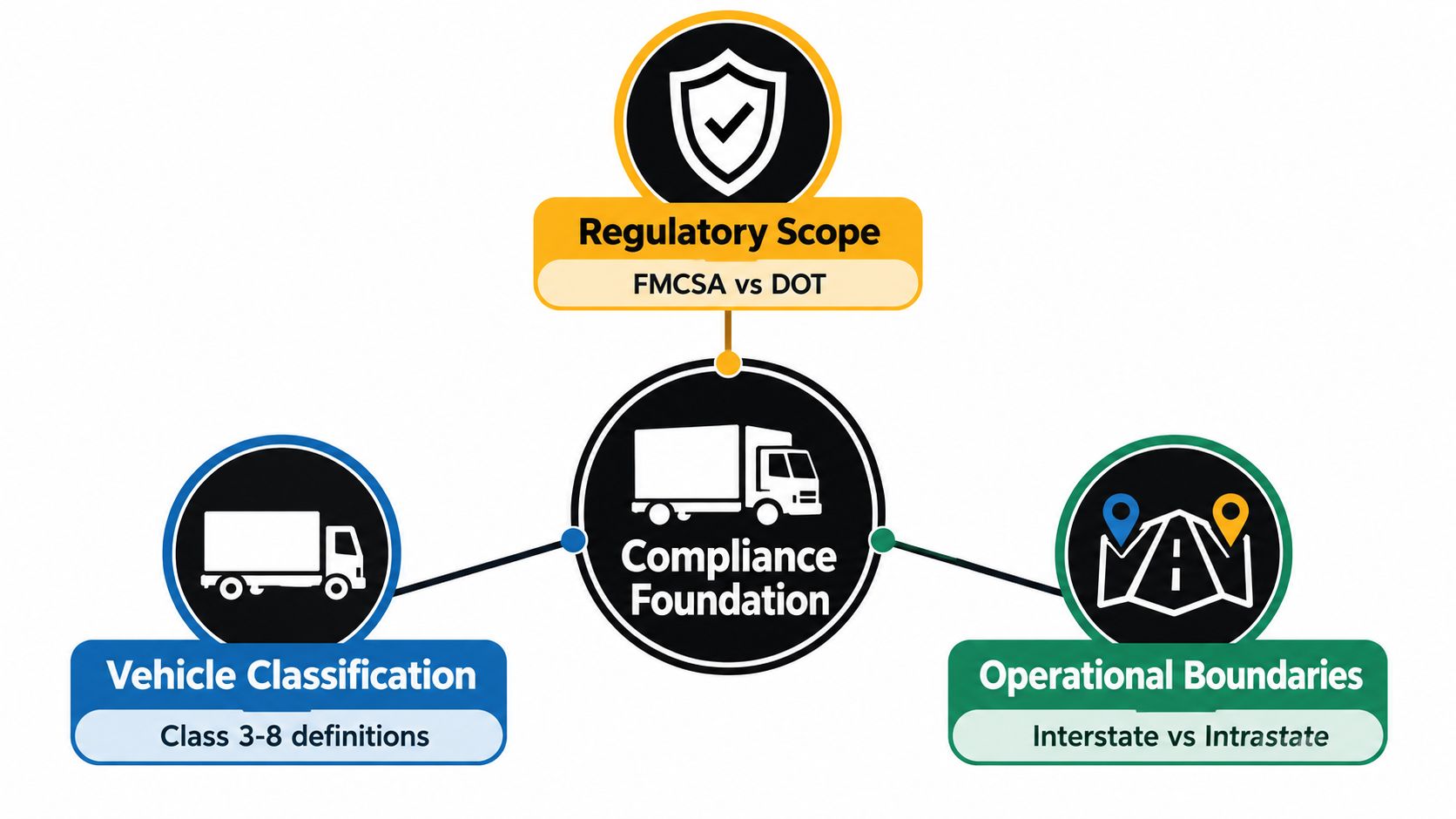
The most important questions are straightforward:
- Who owns the freight? A private carrier transports its own goods. A for-hire carrier transports property for compensation.
- Where does the truck operate? Interstate commerce can include a shipment that crosses state lines, while intrastate work follows state-specific rules and may still be connected to interstate freight.
- What is the truck's rating? GVWR and GCWR determine key federal thresholds, not the length of the cargo box.
- What freight is being carried? Exempt commodities and special cargo can alter the regulatory analysis.
The operating context framework for box-truck businesses captures the issue well. Operators often combine interstate for-hire transportation, private carriage, exempt commodities, the 10,001-pound USDOT threshold, and the 26,001-pound CDL threshold into one general question. That approach creates gaps because each threshold answers a different question.
Match the document to the activity
A driver's license answers whether the person may operate the vehicle. A USDOT number identifies a motor carrier subject to applicable federal registration requirements. Interstate operating authority, often associated with MC authority, addresses whether a carrier may provide certain for-hire transportation across state lines. These aren't interchangeable documents.
For example, a non-CDL truck can still require USDOT registration when its rating and operation meet the applicable federal conditions. A private carrier may not need the same operating authority as a for-hire carrier, while a carrier staying within certain commercial zones may have a different filing profile. Dispatch should confirm the operating model before advertising lanes or accepting freight.
Vehicle identity also matters during onboarding and maintenance. A commercial VIN review, such as the Vektracer commercial truck VIN check, can help teams verify vehicle information before relying on a truck's advertised specifications. The VIN record doesn't replace the door-plate rating or regulatory review, but it supports a cleaner equipment file.
Practical rule: Start with the shipment, route, carrier role, and vehicle rating. Don't start with the truck's length.
Navigating GVWR and Licensing Thresholds
A 24-foot or 26-foot box truck doesn't automatically require a CDL. The controlling question is the manufacturer's GVWR, or the applicable GCWR when the vehicle operates with a trailer. Federal guidance identifies 26,001 pounds GVWR as the central threshold for a single vehicle. At or above that rating, the vehicle generally requires a Class B CDL. A combination can trigger Class A CDL requirements when the combination ratings meet the federal threshold.
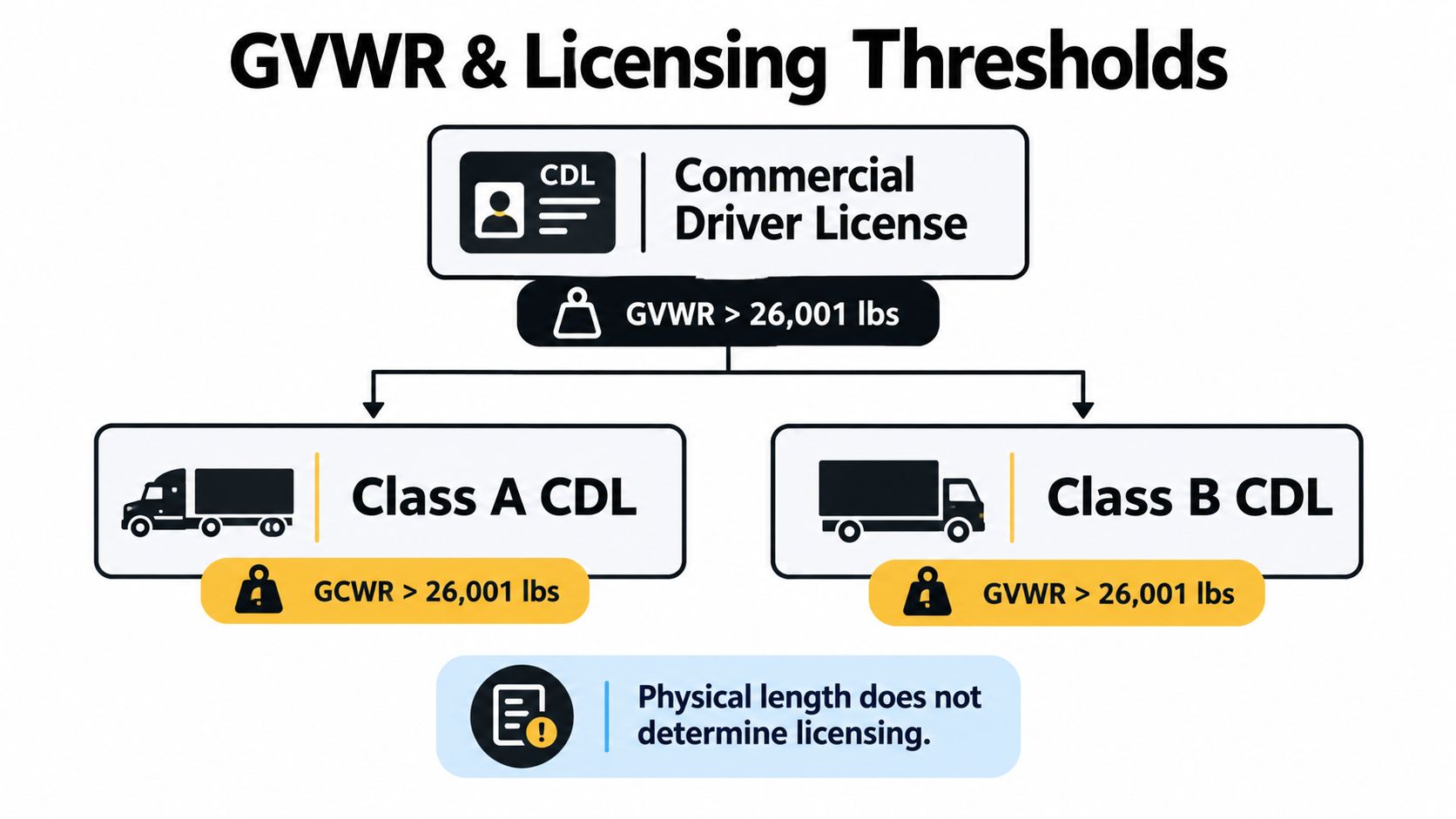
The FMCSA commercial driver licensing guidance distinguishes the vehicle classes by rating and configuration. A single vehicle rated at 26,001 pounds or more generally falls into Class B territory. A combination can require Class A treatment when the tow vehicle and trailer ratings meet the applicable combination rule.
That means two trucks with the same body length may produce different hiring and scheduling outcomes. One may fit a non-CDL operating model, while another requires a qualified Class B driver. The physical dimensions matter for docks, turning radius, pallet capacity, and route access. They don't determine the CDL by themselves.
Read the rating plate, not the advertisement
Before placing a driver in a truck, verify:
- GVWR: The vehicle's rated maximum operating weight.
- GCWR: The rated maximum for the combination when a trailer is involved.
- Axle ratings: These affect loading decisions and can create a violation even when total weight appears acceptable.
- Vehicle configuration: A truck that operates alone is assessed differently from a tow vehicle and trailer combination.
The 10,001-pound threshold has a separate role in interstate operations. It can affect USDOT registration and related compliance duties, but it isn't the CDL cutoff. Confusing those thresholds leads to two common errors: treating a non-CDL truck as exempt from all commercial obligations, or requiring a CDL solely because a truck exceeds the USDOT threshold.
For middle-mile fleets, the weight-based model can expand the available driver pool when the equipment is properly rated and operated within its limits. It also requires disciplined asset control. The dispatcher should record each truck's rating, confirm the assigned driver's license status, and flag any trailer combination before the route is released.
For a more detailed operational explanation, review Peak Transport's box truck CDL requirements guide. The useful takeaway is simple: license the vehicle you operate, not the truck you think you bought.
The following video can provide additional visual context for CDL classifications and vehicle ratings.
Insurance and Financial Responsibility Standards
Insurance is where the difference between legal minimums and commercial readiness becomes obvious. A carrier may satisfy a federal filing requirement yet remain unable to book the loads its dispatch team wants. Brokers and enterprise shippers often verify coverage before onboarding, and their requirements can exceed the minimum needed to operate.
For non-hazardous property hauling, federal rules commonly cited for interstate carriers operating vehicles over 10,000 pounds GVWR require at least $750,000 in public liability coverage. Brokers or shippers often ask for $1,000,000 before awarding freight, as outlined in this commercial box-truck insurance guidance. The difference is operationally significant. A certificate showing the lower limit may demonstrate technical compliance but still fail a customer's onboarding portal.
Build the insurance file in layers
Auto liability protects against third-party injury and property claims arising from vehicle operations. The limit must satisfy both the applicable federal requirement and the customer's contract.
Cargo coverage addresses the freight being transported. Shippers care about this because a damaged pallet, missing carton, or shifted load can create a claim separate from a vehicle accident.
Physical damage coverage protects the truck itself. It matters particularly when the carrier owns or finances modern equipment and can't absorb a major repair or replacement event.
Filings and endorsements may include an MCS-90 or state filings, depending on operating authority, geography, and the carrier's structure. The insurance agent should confirm which filings apply rather than treating them as universal paperwork.
A certificate of insurance is only useful if it matches the actual operation. Verify the named insured, covered vehicles, policy dates, cargo terms, and required endorsements before the truck enters a shipper's network. If the company rents or leases equipment, confirm that the specific vehicle is covered under the policy.
The box truck insurance requirements resource from Peak Transport can help organize the review. The practical standard is to insure for the freight market you intend to serve, not merely the lowest figure that allows the authority file to remain active.
Cargo Securement and Load Configuration Rules
A box truck's cargo box blocks weather and theft risks, but it does not hold freight in place. Hard braking, tight turns, rough pavement, and emergency maneuvers can move pallets after the truck leaves the dock. A load that appears stable at pickup may create a safety and delivery problem halfway through an overnight middle-mile route.
The FMCSA cargo securement rules require the aggregate working load limit of the securement system to equal at least one-half of the weight of the secured article or group of articles. That capacity applies to the complete system, including straps, anchors, blocking, and other components. Counting straps alone does not establish compliance.
Build the load around the route
Before loading, dispatch should provide the freight weight, dimensions, packaging condition, stops, and any hub-handling requirements. The driver and loader can then determine whether the freight needs blocking, bracing, tie-downs, or another restraint method.
For a 10,000-pound secured article or group, the system's aggregate working load limit must reach at least 5,000 pounds. The team must verify the working load limit of the actual equipment in use. A damaged strap, weak anchor, or unsuitable blocking arrangement can reduce the system's usable capacity.
The loading sequence should answer four operational questions:
- How will forward movement be controlled? Use bulkheads, load bars, blocking, or suitable tie-downs where the configuration permits.
- Can the securement survive handling? Keep straps clear of sharp edges and inspect for cuts, fraying, damaged hooks, and failed tensioners.
- Is the weight positioned correctly? Keep freight within the vehicle's axle and overall ratings, placing heavier items where they support stability.
- What changed at the last stop? A pallet shifted at a hub can leave a gap or reduce restraint before the next departure.
The load management systems guide connects securement choices with dispatch and warehouse procedures. Major freight networks expect repeatable execution, not a load that was secure only at origin. For overnight routes, the operating standard is a documented configuration that drivers, loaders, and hub teams can reproduce on every departure.
Evaluating W-2 Employment Versus Contractor Models
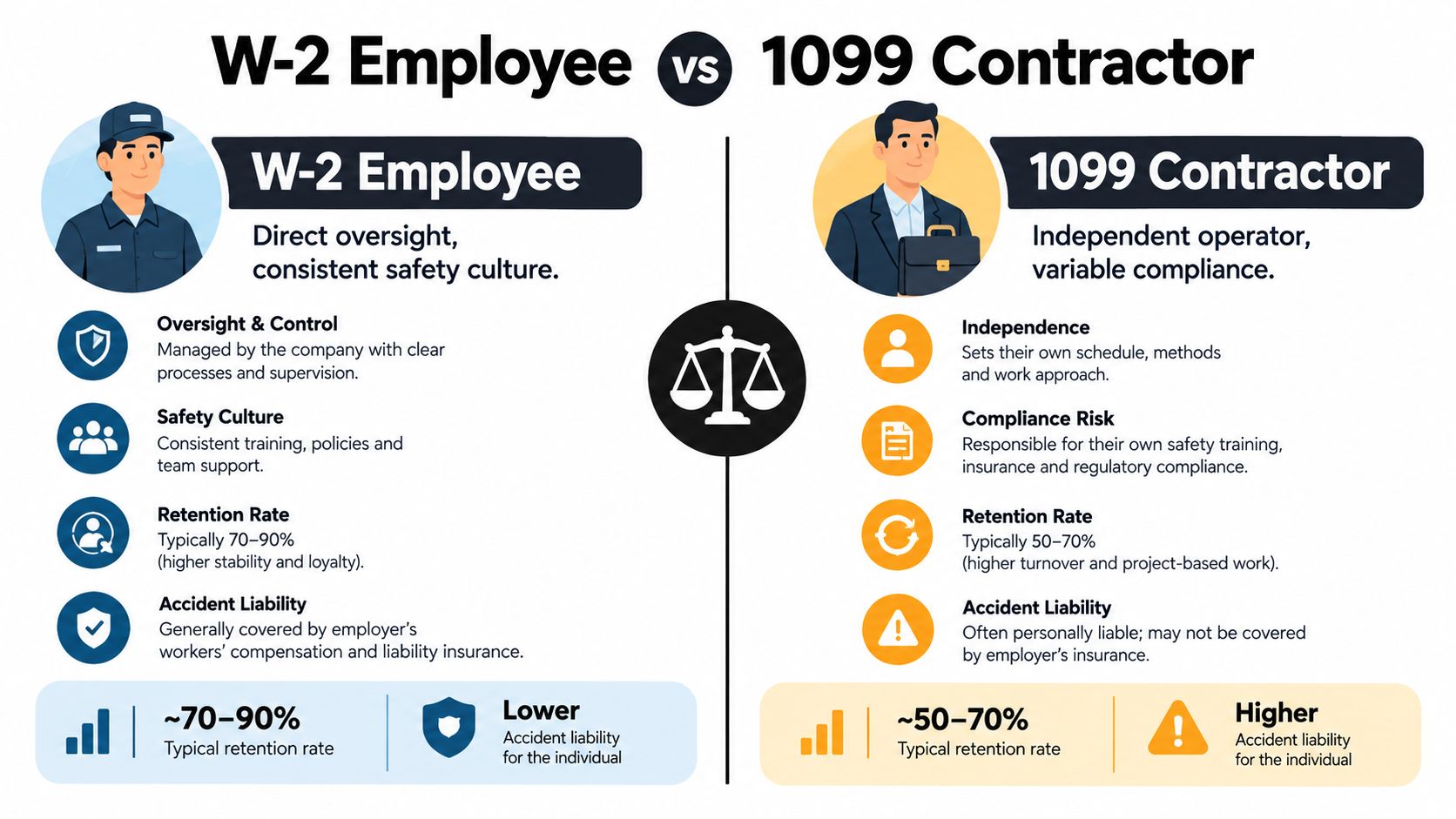
The employment model changes who controls the daily compliance process. A W-2 employee structure gives the fleet direct responsibility for training, dispatch instructions, inspection follow-up, and documentation. A 1099 contractor model can provide flexibility and access to independent operators, but the carrier must carefully define who owns the truck, who directs the work, and who maintains the required records.
| Operating concern | W-2 employee | 1099 contractor |
|---|---|---|
| Dispatch control | The fleet can use a structured route and communication process. | The contract must define responsibilities without disguising an employment relationship. |
| Training | The company can standardize onboarding and paid operational training. | The carrier must verify qualifications and document the contractor's readiness. |
| Safety culture | Policies, coaching, inspections, and corrective action stay within one management system. | Oversight may vary across operators and equipment owners. |
| Equipment condition | The company controls maintenance standards for assigned vehicles. | The carrier needs a reliable inspection and maintenance verification process. |
| Reliability | Consistent schedules are easier to engineer around a dedicated team. | Capacity can expand, but availability and procedures may vary. |
Match the model to the lane
Overnight middle-mile routes reward consistency. Drivers need clear hub instructions, defined check-in procedures, accurate paperwork, and dependable equipment. A W-2 model often supports that structure because the company can train drivers on the same workflows and address recurring errors through supervision.
Contractor networks can work when the carrier has strong qualification gates, written procedures, equipment standards, and document controls. They become risky when dispatch assumes that an independent operator understands the customer's process without verification. The company still needs to confirm that the truck, driver, insurance, and operating authority fit the assigned work.
A contractor model can add capacity, but it doesn't remove the carrier's need for disciplined compliance controls.
Administrative tools can also help independent operators organize invoices, records, and business tasks. Snyp for contractors is one resource a contractor may evaluate, but software doesn't replace driver qualification, vehicle inspection, or insurance verification.
For fleets hiring career drivers, the W-2 approach can support paid training, benefits, predictable schedules, and direct leadership. For flexible capacity, contractors may make sense when the carrier has a mature verification process. The right choice depends on the lane design and the level of control the customer expects.
Daily Compliance Operations and Recordkeeping
The route can fail before the truck reaches the first hub. A missed inspection, vague defect report, or expired driver document can turn an otherwise serviceable vehicle into a compliance problem. Treat compliance as a daily control process, not a registration event.
For interstate box trucks over 10,001 pounds used in applicable commercial operations, USDOT registration, medical certification, inspections, and DVIR or maintenance-record obligations may apply. Standard equipment should include an annual inspection kit, reflective triangles, and a fire extinguisher, as described in this box truck compliance guide.
Build the departure check into dispatch
Before the truck leaves the yard, the driver should verify vehicle condition, required equipment, and the load. Check tires, lights, mirrors, brakes, doors, liftgate operation where fitted, and visible leaks or damage. On overnight middle-mile routes, this check matters because a defect found after departure can disrupt a fixed hub handoff and leave little recovery time.
A defect report must tell maintenance and dispatch what happened. “Truck issue” gives neither team enough information. Record the affected component, describe the condition precisely, add a photo where the system permits it, and document whether the vehicle may operate safely.
Dispatch then keeps the record usable throughout the trip:
- Verify documents: Keep the driver file, medical documentation where applicable, vehicle records, insurance information, and route paperwork current.
- Assign defects: Give each reported issue an owner, repair status, and final disposition.
- Schedule inspections: Maintain the required inspection cadence instead of waiting for a roadside event.
- Confirm route rules: Check state requirements when a route crosses jurisdictions or enters restricted facilities.
- Close the trip file: Store delivery records, exception notes, damage reports, and maintenance communications in one consistent location.
Major freight networks often assess this control discipline alongside basic legal compliance. A truck may be safe, yet the carrier still cannot demonstrate that fact without complete records. At closeout, dispatch should identify the truck and driver, list reported defects, and show how each issue was handled. That evidence protects the operation during audits and helps managers spot recurring equipment or process failures.
Minnesota and Interstate Middle-Mile Considerations
A Twin Cities overnight run can look routine on the dispatch board and still fail at the handoff. Weather, congestion, dock access, staging capacity, and a missed appointment can erase the recovery time built into a middle-mile schedule. Plan the lane around the transfer, not only the miles between facilities.
Minnesota dispatchers must identify which rules apply to each movement. Federal requirements may set the baseline for licensing and operations, while state-specific rules can affect registration, inspections, weight, equipment, and intrastate activity. Confirm every jurisdiction on the route, including the origin, destination, and any facility access requirements. A truck that qualifies for one lane may need different documentation or equipment on another.
The practical test is whether the assigned truck and driver can complete the handoff under actual conditions:
- Appointment control: Use the hub's check-in process and cutoff times when setting departure and arrival targets.
- Winter readiness: Allow for slower travel, reduced visibility, snow-covered loading areas, and limited parking.
- Driver preparation: Send access instructions, contact details, delivery documents, and equipment requirements before departure.
- Exception authority: Identify who may approve a reroute, delay, alternate staging site, or customer notification.
- Second movement review: Treat a backhaul or return load as a separate move, with its own freight, securement, and paperwork checks.
Historical route notes and facility instructions help dispatch set realistic plans. They also show which delays repeat, where drivers lose time, and which handoffs need a different buffer. Route efficiency comes from accurate operating information, not optimistic map estimates.
Upper Midwest equipment needs closer attention before winter departures. Inspect doors, tires, lights, liftgates, heating systems, and securement gear before the truck reaches the first hub. Preventive maintenance does not remove weather risk, but it reduces equipment-related interruptions and gives dispatch more control over recovery options.
Peak Transport operates Minnesota-based overnight box-truck routes between Twin Cities distribution centers and regional hubs, including MSP-area nodes. Its model uses W-2 drivers, structured dispatch, route documentation, and maintained equipment, showing how repeatable handoffs can replace improvised daily coverage.
Fleet Compliance Audit and Quick Reference
An onboarding audit should answer one operational question: Can this exact truck and this exact driver perform the assigned lane today, legally and contractually? A general company review will not expose a missing inspection, unsuitable equipment rating, expired document, or customer requirement that blocks dispatch. Major freight networks assess the specific truck, driver, insurance, authority, and records tied to the move.
Audit the carrier and operating authority
- Define the carrier role: Record whether the operation is private, for-hire, interstate, intrastate, or covered by an exemption.
- Confirm registrations: Check USDOT registration requirements and whether interstate operating authority applies.
- Map the route: List every state, facility, commercial zone, and customer rule involved.
- Verify customer onboarding: Compare insurance, equipment, markings, apps, and document requirements with the fleet's actual capabilities.
A route can satisfy the legal minimum and still fail a shipper's onboarding review. Dispatchers should keep the carrier profile, authority records, insurance evidence, and customer approvals together so a lane assignment can be cleared without searching across separate systems.
Audit each vehicle
| Review area | Evidence to keep |
|---|---|
| Vehicle rating | Door-plate GVWR, GCWR where relevant, and axle ratings |
| Identification | VIN, unit number, registration, and required markings |
| Inspection | Current inspection records and defect-resolution history |
| Maintenance | Preventive service, repairs, tires, brakes, lights, and liftgate records |
| Safety equipment | Annual inspection materials, reflective triangles, fire extinguisher, and required route equipment |
| Cargo capability | Pallet equipment, tie-downs, load bars, blocking, and working load limits |
Audit every driver file
Confirm that the driver holds the correct license for the vehicle and combination. Review medical certification where applicable, driving history, training records, inspection acknowledgments, and customer-specific onboarding documents. A contractor file requires the same operational clarity as a W-2 driver file, even though the business relationship differs.
Fleet software can centralize inspections, maintenance, documents, and assignment history. Wistec's fleet software breakdown offers a reference for comparing those functions before selecting a system.
Audit standard: If a dispatcher must search personal phones, email threads, and paper folders to prove compliance, the process is not ready for enterprise freight.
Frequently Asked Questions About Box Truck Rules
Can a non-CDL box truck cross state lines?
It can, if the vehicle's rating and configuration remain below the applicable CDL threshold and the operation satisfies the other federal and state requirements. Non-CDL doesn't mean noncommercial. Interstate operations can still involve USDOT registration, insurance, medical certification, inspection, recordkeeping, and operating authority based on the carrier's role and vehicle rating.
Does a 26-foot box truck always need a CDL?
No. Length alone doesn't determine licensing. A 26-foot truck can be non-CDL or CDL-dependent depending on its GVWR. Check the manufacturer's rating plate and confirm whether the truck operates alone or with a trailer.
What documents should dispatch verify before a middle-mile route?
At minimum, verify the driver's license status, medical documentation where applicable, vehicle registration, inspection and maintenance status, insurance evidence, operating authority, route instructions, and customer-specific onboarding requirements. The exact file depends on the operating context, but dispatch should never assume that a clean vehicle is enough.
What should a driver do during a roadside inspection?
Stay professional, provide the requested documents, and avoid guessing when answering questions. The driver should report any identified defect to dispatch promptly, preserve the inspection result, and follow the company's process for repairs or corrective action. A roadside inspection is also a test of whether the fleet's records match the truck's actual condition.
Does insurance at the legal minimum guarantee access to freight networks?
No. Federal financial responsibility requirements and customer onboarding standards aren't always the same. A carrier may carry the commonly cited $750,000 public liability minimum for certain interstate operations over 10,000 pounds GVWR, while a broker or shipper may require $1,000,000 before awarding loads, as explained in the earlier insurance guidance.
What is the most common dispatch mistake?
Treating the truck as the whole compliance decision. The correct assignment connects the vehicle rating, driver qualification, route, freight, authority, insurance, securement plan, and customer rules. If one part changes, dispatch should recheck the assignment instead of relying on an old approval.
How should a fleet prepare for overnight hub work?
Use repeatable departure and arrival procedures. Confirm the appointment, access instructions, load condition, securement, equipment, driver documents, weather plan, and escalation contact before release. Then close the trip with delivery evidence, exceptions, damage notes, and any maintenance follow-up.
Middle-mile reliability comes from removing uncertainty before the truck leaves. The legal minimum is the starting point, while dependable freight performance requires a documented operating system that drivers and dispatchers can execute every night.
Peak Transport offers structured overnight box-truck operations across the Twin Cities metro and surrounding regional hubs, supported by W-2 drivers, clear dispatch communication, paid training, and maintained equipment. If you need a compliant middle-mile partner or you're a Minnesota driver seeking predictable routes and benefits, visit Peak Transport to learn more.