Transportation Compliance Solutions Guide
Explore transportation compliance solutions for middle-mile logistics. Learn how ELDs, safety tech, and training reduce risk and improve reliability in 2026.
October 1, 2026
Transportation compliance solutions bring together policies, trained staff, operational processes, and connected software to keep vehicles, drivers, records, and schedules within required standards. For middle-mile fleets, they work a lot like an operating system: tying together Hours of Service, route planning, payroll, dispatch, insurance, and audit records instead of treating compliance as paperwork after a trip.

How Transportation Compliance Supports Reliable Operations
A compliance program acts as the guardrail around daily transportation work. It helps a dispatcher assign a legal run, confirms that a driver is qualified, records what happened on the road, and preserves evidence when a customer, insurer, or regulator asks questions. Connected transportation systems can pull data from vehicles and fleet equipment for monitoring, reporting, and process automation, as Digi’s transportation IoT overview explains.
That connection matters most in middle-mile logistics, where overnight schedules and fixed handoffs leave little room for recovery. A missing document can delay a driver, while a poor hours calculation can force a last-minute replacement. In contrast, accurate compliance data helps teams protect on-time performance without asking drivers to improvise.
For a supply chain manager, the practical benefits include:
- Earlier decisions, because dispatch sees approaching hours limits before assigning freight.
- Cleaner payroll, because verified duty and trip records reduce manual reconciliation.
- Faster audits, because qualifications, inspections, insurance, and incident files are organized.
- More consistent service, because every shift follows the same documented expectations.
Good compliance works like a traffic control system. It prevents avoidable conflicts before they become delays, violations, or safety events.
Traditional paper files can still preserve information, but they depend on repeated manual checks. Modern platforms connect records, alerts, and workflows so a compliance coordinator can act before a problem reaches the dock.
| Operating approach | Audit readiness | Data accuracy | Operational effect |
|---|---|---|---|
| Paper forms and spreadsheets | Slow file searches and missing signatures | Dependent on manual entry | Administrative drag and reactive dispatch |
| Connected compliance system | Centralized, searchable records | Automated capture with review controls | Earlier warnings and more predictable execution |
The best solution is not simply a dashboard. It combines policy, process, training, vendor oversight, and technology around the lanes a fleet actually runs. For example, Peak Transport’s W-2 driver model, structured dispatch, route documentation, and safety standards support accountability across recurring Twin Cities overnight operations.
Before comparing providers, read this guide to fleet compliance management for a practical view of how records and daily controls fit together. The key question is simple: can your compliance process help the operation make better decisions before a trip begins?
Safety Compliance as a Business Control
Safety compliance is a business control, not merely a way to avoid citations. In transportation and warehousing, employees face demanding physical work, vehicle movement, loading hazards, fatigue, and time pressure. One preventable event can affect people, customers, insurance costs, and delivery schedules all at once.
For middle-mile operators, that risk compounds overnight. A driver who begins a shift tired or distracted may miss a warning, damage freight, or arrive late at the next hub. The result is not just a safety record entry. It can trigger replacement labor, claims, customer escalations, and missed handoffs.
The strongest transportation compliance solutions prevent disruption before an incident becomes an operational emergency.
That is why safety technology should be viewed like a smoke detector rather than a rear-view mirror. A dashcam with driver-facing monitoring can identify distraction, harsh driving, or signs of fatigue while there is still time for coaching. AI monitoring does not replace judgment, but it gives managers earlier signals than an accident report provides.
Connect Safety Data With Business Results
A practical program links each safety measure to an operating outcome:
- Fatigue alerts can prompt a dispatch check before a driver exceeds safe limits.
- Distraction warnings can support focused coaching instead of waiting for a collision.
- Harsh-braking data can reveal risky intersections, poor following distance, or route issues.
- Incident records can guide training, equipment reviews, and insurance discussions.
Connected fleet systems can combine vehicle data, monitoring, and reporting for real-time oversight, as Digi’s transportation IoT overview describes. For a recurring Twin Cities overnight route, that visibility helps leaders distinguish a one-time mistake from a repeated pattern requiring action.
The financial case becomes clearer when prevention is measured against disruption. An incident may involve vehicle repair, medical treatment, cargo loss, legal review, administrative time, and a driver’s absence. Even when insurance covers part of the expense, deductibles, lost capacity, and reputational damage remain.
Build Prevention Into Daily Dispatch
Compliance also protects service quality by keeping fatigue and distraction from degrading performance. A driver who is alert is more likely to follow route instructions, communicate clearly, inspect equipment, and complete a handoff accurately.
Peak Transport’s W-2 employment model, paid training, structured dispatch, and documented routes create practical accountability. Managers can set expectations, review performance consistently, and provide support before a preventable event affects a customer.
Use a simple review cycle:
- Capture safety and hours data from every shift.
- Prioritize repeated or high-risk behaviors.
- Coach drivers with specific examples.
- Measure whether behavior and service results improve.
For decision-makers comparing transportation compliance solutions, the right question is not whether technology adds cost. It is whether the program reduces avoidable incidents, protects driver hours, and keeps freight moving reliably. Peak Transport’s compliance tracking software guide offers another practical reference for organizing that process.
A solid transportation compliance setup does more than tick boxes on a regulatory checklist. It weaves legal requirements directly into the day-to-day decisions that keep middle-mile freight moving. Think of Hours of Service (HOS) rules and Electronic Logging Devices (ELDs) as the first line of defense. They log every minute a driver spends behind the wheel, on duty, in the sleeper berth, or off duty, giving dispatchers real-time clarity on who can take the next load and who needs to pull over.
And that data shouldn't sit in a vacuum. When ELD feeds into dispatch and payroll systems, a driver closing in on their limit stops being just a compliance flag. It becomes a routing problem, a potential missed handoff, a gap in tomorrow's delivery schedule.
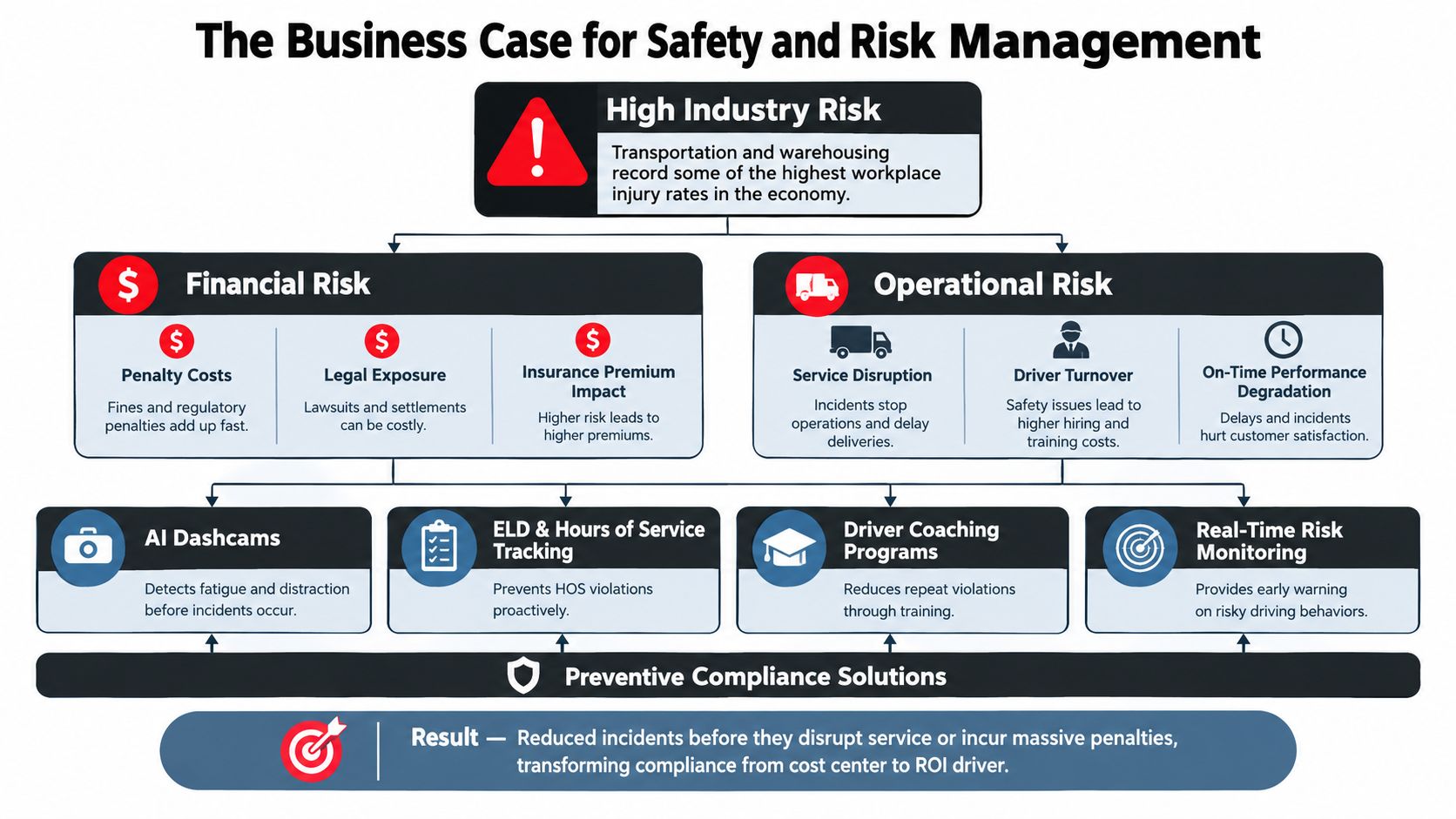
The flowchart above traces how financial and operational risk flows into preventive measures like ELD tracking, driver coaching, dashcams, and live monitoring. The takeaway: when these tools talk to each other, you protect both safety and service reliability before a violation or incident shuts down a lane.
Keep Driver Records Inspection Ready
HOS controls are one piece of the puzzle, but a complete driver file goes further. Every driver should have a current driver qualification file that includes verified licenses, up-to-date medical documentation, background and driving-history checks, training records, and scheduled review dates.
Insurance verification adds another layer of protection. Before a driver or vendor locks into a recurring lane, confirm policy status, coverage limits, assigned vehicles, and renewal dates. For a practical breakdown of what transport insurance actually covers, this goods-in-transit cover explained resource is worth a look.
Beyond individual files, a middle-mile operation needs safety-program documents that show how expectations translate into habit:
- Vehicle inspections, defect reports, and proof that repairs were completed.
- Incident reports paired with investigation notes and documented corrective actions.
- Drug and alcohol program records, where regulations require them.
- Training evidence covering defensive driving, secure loading, fatigue awareness, and emergency response.
Connect Policies, People, and Platforms
These records only do their job when they function as one chain, not a stack of disconnected folders. Picture an ELD alert that simultaneously prompts a dispatcher review, logs a coaching conversation, and adjusts the route plan. Or a recurring inspection defect that automatically triggers a maintenance hold before the truck ever leaves the yard.
If your compliance data never influences the next dispatch decision, you're probably storing it rather than managing it.
When operations leaders want to assess whether their workflows measure up, this guide to compliance tracking software offers a useful comparison point. The end goal is a searchable system that captures who acted, when they acted, and what changed as a result.
A simple audit exercise can quickly expose weak links in the chain:
- Pick one driver and one recent overnight trip.
- Cross-reference the assigned route against actual HOS availability.
- Pull up qualification, insurance, inspection, and training records and verify they're current.
- Confirm that any exceptions received documented follow-up.
That sequence transforms transportation compliance from a last-minute document scramble into a working safety system that runs quietly in the background, catching problems before they become headlines.
Technology can flag a risk, but trained people decide what happens next. A driver might get an HOS alert and still need to know when to pull over, who to call, and how to log the decision properly. Without that judgment, even solid compliance tools turn into expensive notification machines instead of actual safety controls.
Training shouldn't wait until someone's already running a regular lane. Start before they hit the road and keep it going with scheduled refreshers. Short lessons, live demonstrations, and coached practice work best for:
- Hours of Service and ELD procedures, covering edits, annotations, and what to expect during roadside inspections.
- Vehicle inspections, defect reporting, secure loading, and emergency response.
- Fatigue and distraction prevention, with straightforward escalation rules everyone understands.
- Documentation standards, so every shift leaves behind complete, legible records.
Here's a concrete example. A dispatcher runs an overnight scenario where a loading delay eats into available driving time. The driver practices reporting that delay early, while dispatch works through adjusting the plan without creating pressure to push past HOS limits. Both sides learn the rhythm before it matters.
Turn Training Into a Repeatable Process
One orientation session doesn't change behavior. What works is a cycle that ties instruction to what you actually observe on the job:
- Teach the policy through a realistic route example.
- Check understanding with a quiz or hands-on demonstration.
- Watch behavior through inspections, ELD reviews, or ride-alongs.
- Coach immediately when records or decisions come up short.
- Recheck the same measure after coaching to confirm the fix stuck.
This cycle narrows the gap between drivers and shifts. It also gives compliance coordinators proof that training wasn't just assigned—it was completed, understood, and actually followed through on.
A signed policy proves you handed it out. A documented coaching record proves you managed it.
Keep Records Ready for Inspection
Centralized records should reflect the current status of every driver, vehicle, vendor, and corrective action. Assign owners and review dates for licenses, medical documents, training completions, inspections, insurance certificates, incidents, and disciplinary follow-up.
A searchable platform helps, but the process behind it matters more. Name someone accountable for clearing expired items, lock down who can edit records, preserve historical versions, and test retrieval by pulling a random driver file within a few minutes.
For practical ways to organize all of this, read this guide to transportation compliance documentation. The principles extend well beyond fleet operations too—this access control audit guide covers recordkeeping fundamentals that apply across the board.
Peak Transport's W-2 driver model, paid training, structured dispatch, and documented routes create consistent expectations across Twin Cities overnight lanes. That consistency protects handoffs, cuts down on avoidable fines, and gives brands confidence that freight will move safely and on schedule.

Middle-mile logistics is built on repetition. Regional box-truck fleets may follow the same overnight lanes between distribution centers and hubs, yet every shift still depends on legal driving time, accurate records, and a prepared replacement plan. Transportation compliance solutions connect those details so predictable schedules stay predictable.
Think of the system as a flight plan with guardrails. Dispatch can see a driver's available hours, planned stops, loading delays, and handoff requirements before assigning freight. ELD data and connected fleet software support real-time monitoring and reporting, as Digi's transportation IoT overview explains.
Plan Overnight Routes Around Legal Capacity
A compliant schedule starts before the truck leaves the yard. Dispatch teams should build routes around realistic loading time, traffic, inspections, fueling, and breaks, rather than treating every minute as driving capacity.
For a recurring Twin Cities lane, software can flag when a delay threatens HOS availability. The dispatcher can then adjust the pickup sequence, assign relief capacity, or notify the receiving hub before the handoff is at risk.
Useful controls include:
- Pre-dispatch HOS checks, confirming the driver can legally complete the planned work
- Live exception alerts, identifying delays before they become missed handoffs
- Route documentation, recording approved stops, contacts, and escalation steps
- Post-trip reconciliation, comparing planned activity with actual logs and outcomes
Compliance should shape the route plan, not merely document what happened after the route failed.
Create Accountability Through Employment Structure
Technology works best when people understand who owns each decision. A W-2 driver model gives middle-mile operators a direct employment relationship, making training, coaching, documentation standards, and performance expectations easier to apply consistently than in contractor-heavy arrangements.
That structure does not remove responsibility from leadership. It creates a clearer foundation for it. Drivers receive defined procedures, paid training, and dependable communication, while managers can address repeated issues through documented coaching rather than informal reminders.
Peak Transport's structured dispatch, W-2 employment model, and consistent overnight schedules reflect this approach. The company's planning model treats logistics as engineered work, with clear expectations replacing last-minute improvisation.
Verify Partners Before Freight Moves
Brands should ask transportation partners to demonstrate how compliance affects daily execution. Review whether the provider can show current driver files, insurance records, inspection processes, HOS oversight, training evidence, and incident follow-up.
A practical partner review can include:
- Select one active overnight lane
- Trace a recent trip from dispatch through delivery
- Confirm that records support each major decision
- Check how exceptions were escalated and resolved
- Compare compliance performance with on-time results
When compliance data informs dispatch, coaching, and partner reviews, it becomes a reliability control. For middle-mile brands seeking stable execution, Peak Transport offers overnight box-truck operations across the Twin Cities with documented routes, safety-focused leadership, and dependable lane structures. Contact Peak Transport to discuss a compliant middle-mile plan for your network.
Picking among transportation compliance solutions isn't really like shopping for an app. It's more like hiring a control tower. The right partner gives dispatch, safety, payroll, drivers, and leadership one shared view so everyone makes decisions from the same information at the same time.
Start with your actual operation, not the sales deck. A vendor that primarily serves long-haul carriers may never have dealt with recurring overnight box-truck lanes, tight hub handoffs, or the kind of planning discipline required across the Twin Cities. Connected transportation systems can absolutely handle real-time monitoring, reporting, and fleet analytics — Digi's IoT solutions overview lays out how — but those features only matter if they fit the way your team already works.
Test Operational Fit Before Signing
Ask vendors to walk through something real: a loading delay that eats into a driver's available hours, for example. Watch what happens. Does the platform alert dispatch right away? Does it preserve the ELD record? Does it document the decision and show the ripple effect on the next handoff?
Make sure these five capabilities are present:
- Dispatch integration so compliance status actually shapes assignments instead of sitting in a dashboard nobody checks.
- State-specific support that accounts for Minnesota requirements and evolving regulatory obligations.
- Real-time visibility across driver status, vehicle records, documents, training deadlines, and corrective actions.
- Audit support with searchable histories, clear timestamps, permission controls, and exportable records.
- Training resources that cover onboarding, refresher lessons, coaching tools, and completion tracking.
A compliance partner should help your team prevent the next operational problem, not simply explain the last one.
Ask Questions About Ownership and Support
Before you start comparing prices, get clear on who actually controls your data and how fast your team can pull it back. Can you export complete records if the contract ends? How long does historical data stay accessible? Which users can edit documents versus approve them?
Here is a vendor checklist worth running through:
- Who owns the driver, vehicle, and incident data?
- Can the system connect with dispatch, payroll, ELD, and maintenance tools?
- What happens when an alert gets missed or connectivity drops?
- Can your team build an audit package without calling the vendor?
- Does support include live specialists who understand middle-mile operations?
- How are Minnesota and other state rules tracked and updated?
A short pilot on a single overnight lane will teach you more than any polished demo. Track alert accuracy, dispatcher response time, how quickly records come back, driver adoption rates, and whether on-time handoffs actually improve.
Peak Transport's model — structured dispatch, W-2 drivers, documented routes, and a safety-first operating culture — reflects the kind of accountability a middle-mile partner should bring to the table. If you need dependable, compliant box-truck execution across the Twin Cities, reach out to Peak Transport to start the conversation.