Trucking Companies in Minneapolis: 7 Options for 2026
Compare 7 trucking companies in Minneapolis by service area, freight specialty, and fit. Find the right carrier for LTL, truckload, or overnight freight.
November 18, 2026

A distributor in Eagan has three shipments on the same morning and one dispatch board to cover all of them. One pallet needs to cross the metro by 9 a.m. A second load is bound for Duluth and has to reach the dock before it closes. A third is a full truckload heading east that was booked two weeks ago at a rate nobody wants to revisit.
Three shipments, three different problems. Handing all of them to the biggest name on the first page of results is how shippers end up paying LTL rates for local cartage, or waiting on a regional lane that a national network only serves through an interline partner. Most trucking companies in Minneapolis do one of those three jobs well and the others adequately at best.
This list sorts seven carriers by the shipment problem they solve: same-day metro cartage, regional LTL beyond the metro, statewide and Midwest lanes, and specialized or intermodal freight. Judge each one on the lane and freight type it fits. Before you sign anything, run new carriers through My Safety Manager's carrier vetting guidance.
1. Peak Transport
Freight moving between distribution centers, Amazon Relay nodes, and regional hubs lives or dies on the lane, not the load. The Twin Cities has the density to support that work. In 2023 the metro held 77,550 transportation-and-warehousing jobs, roughly 4.4% of total metro employment, and 79.2% of truck-transportation employment sat in general freight rather than specialized hauling, according to Minnesota DEED. That mix is exactly what a middle-mile operation feeds on.
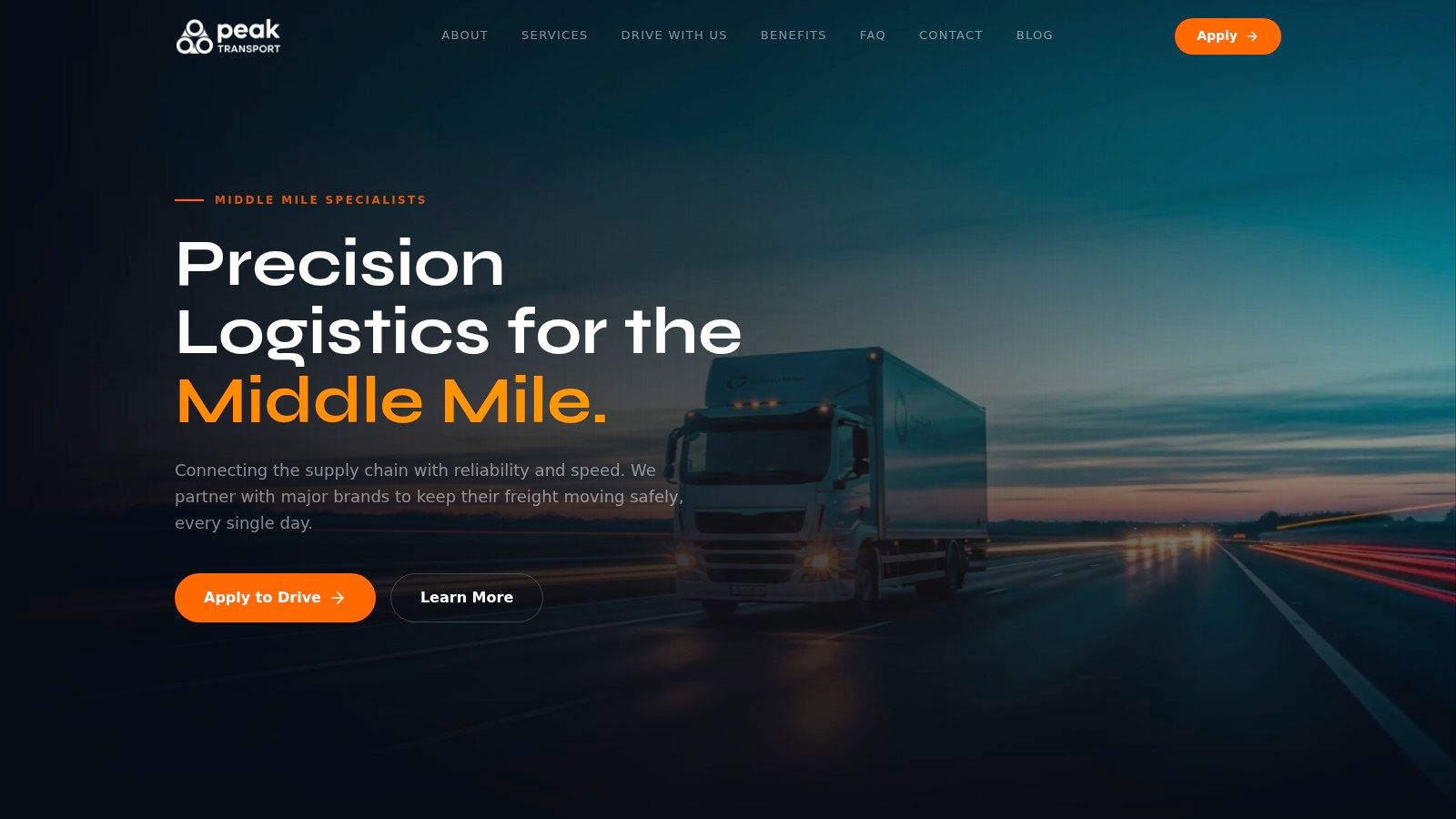
How the overnight model works
Peak Transport runs scheduled box-truck routes between facilities, planned in advance and primarily overnight, so drivers aren't chasing residential stops at random. Route planning uses data modeling to cut unnecessary mileage and fuel burn, and dispatch documents handoffs instead of improvising them. Drivers are W-2 employees, not 1099 contractors, with paid training, paid sick time, health insurance options, and a 401(k) match. Posted starting pay is $25.75 to $28 per hour for full-time and part-time roles, and a CDL is only required where a posting says so.
What to measure: judge an overnight carrier on its P90 arrival window and its dwell record at each facility, not on average transit time.
MnDOT builds its freight performance measures around the Truck Travel Time Reliability Index and bottleneck delay for precisely that reason. Reliability is a number you can hold a carrier to, not a promise in a sales deck.
- Strong fit: repeatable hub-to-hub lanes with fixed appointment windows and predictable nightly volumes.
- Weak fit: one-off residential deliveries, national linehaul tenders, or freight that needs a reefer.
- Ask about: the buffer built into a route when a receiving facility runs late, and who absorbs the detention.
Operations and hiring are centered on Minnesota, shifts run overnight, and route-level pricing plus named customer references aren't published, so a shipper has to request them directly.
2. A&H Cartage
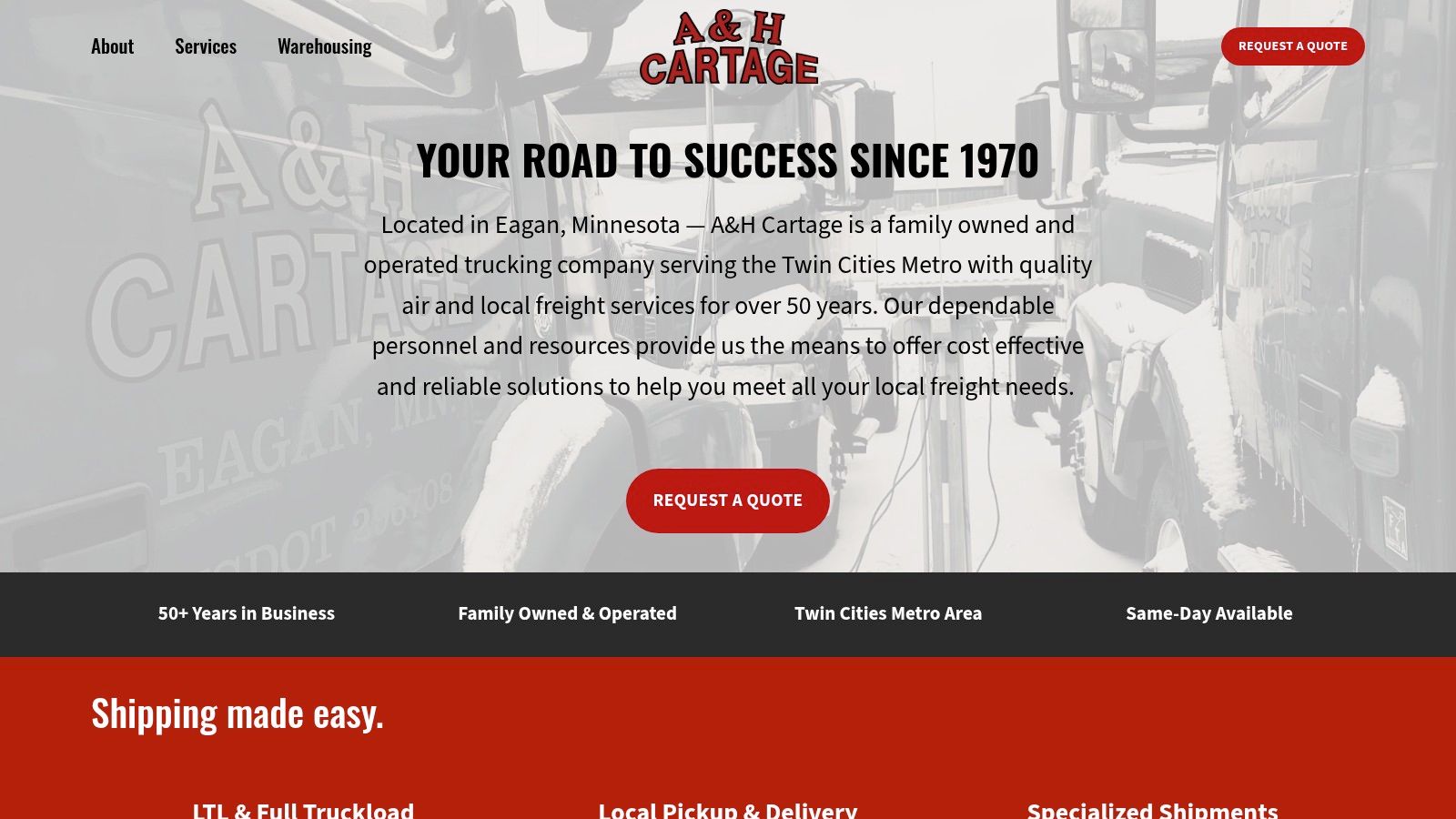
Same-day metro cartage is a service problem before it's a price problem. A pallet that has to be on a customer's dock across the metro by 9 a.m. needs a truck already circling, not a linehaul trailer routed through a terminal. A&H Cartage, based in Eagan, is built around that kind of work.
What the service list actually covers
Expect same-day and next-day metro pickup and delivery, LTL and full truckload dry van, air-freight transport to and from MSP, and liftgate, inside, residential, and appointment-based delivery. The bonded cargo facility with cross-docking and storage is the piece most local carriers lack, and it matters when freight arrives early or a consignee reschedules.
Trade-off: the accessorials are where cartage quotes diverge. Liftgate, inside delivery, and appointment windows can add more to a stop than the line-haul itself, so get them itemized before you compare totals.
Local delivery work carries its own labor economics. The U.S. Bureau of Labor Statistics reports that U.S. delivery truck drivers and driver/sales workers earned a national median annual wage of $43,950 in May 2025, well below tractor-trailer work. That gap is why metro cartage pricing hinges on stop counts, handling, and hours rather than miles.
- Credentials that help: SmartWay, TSA, and hazmat listings cover airport freight and regulated cargo.
- Watch the clock: published hours are weekdays, 6 a.m. to 6 p.m., so a Saturday or late-night drop needs a conversation first.
- Where it stops: this is local and regional freight, not nationwide linehaul, and rates are quote-based with no public tariff.
3. Old Dominion Freight Line
Regional LTL beyond the metro needs a network, not a phone number. Old Dominion runs a Minneapolis-area service center in Shoreview covering the Twin Cities along with St. Paul, Eden Prairie, Bloomington, and Maple Grove, with transit-time estimates and shipment tracking online. If your freight leaves the metro for Chicago or Kansas City and you want one carrier for both directions, that footprint is the reason to shortlist them.
Where the national network earns its keep
The product set goes past standard LTL into expedited, guaranteed, inter-regional, and truckload brokerage options, which means a single vendor relationship can absorb a service failure or a volume spike. The labor base behind that kind of network is substantial: the U.S. Bureau of Labor Statistics truck transportation profile counts 900,880 heavy and tractor-trailer truck drivers nationally in 2025.
A national LTL carrier gives you consistency across states and a claims process that runs at scale. It won't give you a dispatcher who knows which dock door at your building actually works. For that comparison, use this framework for choosing a carrier lane by lane.

Where it falls short is predictability. It isn't a Twin Cities cartage specialist, rates depend on shipment detail and require a quote, and the local center sits in Shoreview, outside Minneapolis city limits, which adds a few miles and minutes on a tight same-day pull.
4. Driver Driven Transportation
Some freight doesn't fit one mode. A manufacturer might need a flatbed for a machine, a blanket-wrapped load for a finished unit, and local cartage for overflow, all in the same week. Driver Driven Transportation covers that spread with nationwide dry-van truckload and LTL, flatbed and Conestoga service, liftgate and ramp handling, and local Twin Cities cartage tied to warehousing.
The workforce constraint behind every schedule
Capacity is only half the problem. The Minnesota LTAP freight guide notes the Minnesota Trucking Association identified a shortage of nearly 8,000 drivers in 2023, and state labor-market projections show 4,864 openings for heavy and tractor-trailer truck drivers over the following decade, spread across roughly 65,500 trucking companies statewide. A carrier that can't hold drivers can't hold an appointment window.
That same guide projects truck freight reaching 534 million tons by 2050, up from 2022 volumes, with trucks carrying about 71% of statewide freight tonnage at that point. Anyone locking in carrier capacity now is buying against a market that gets tighter, not looser.
Where it falls short: pricing isn't published, detailed lane schedules and delivery-time commitments aren't posted, and availability has to be confirmed for the specific freight and location. Retention is a stated selling point rather than a documented number, so verify it during the reference call. Drivers evaluating the employer side can start with this list of top trucking companies to work for.
5. TCBX Trucking
Northbound lanes are where metro carriers thin out. TCBX runs direct overnight LTL between the Twin Cities and central or northern Minnesota points such as Duluth, Bemidji, and Fargo, alongside nationwide truckload shipping, online tracking, service-area lookup, and storage-trailer rentals. If your Eagan pallet needs to land in Duluth tomorrow morning, that's a different service from a national LTL network that would route it through a hub.
Trucks carry most of this state's freight. The Minnesota statewide freight plan puts truck movement at 377 million tons in 2022, or 66.7% of all freight tonnage moving into, out of, or within Minnesota. MnDOT flags a bottleneck where trucks lose at least four hours of delay per day per mile during a peak period, and its reliability problem areas fall on stretches of I-94, I-694, and I-494.
Dispatch rule: a northbound overnight run needs a buffer measured in hours, not minutes, plus a written exception protocol for construction, weather, and incidents. Ask for it in writing before the first tender.
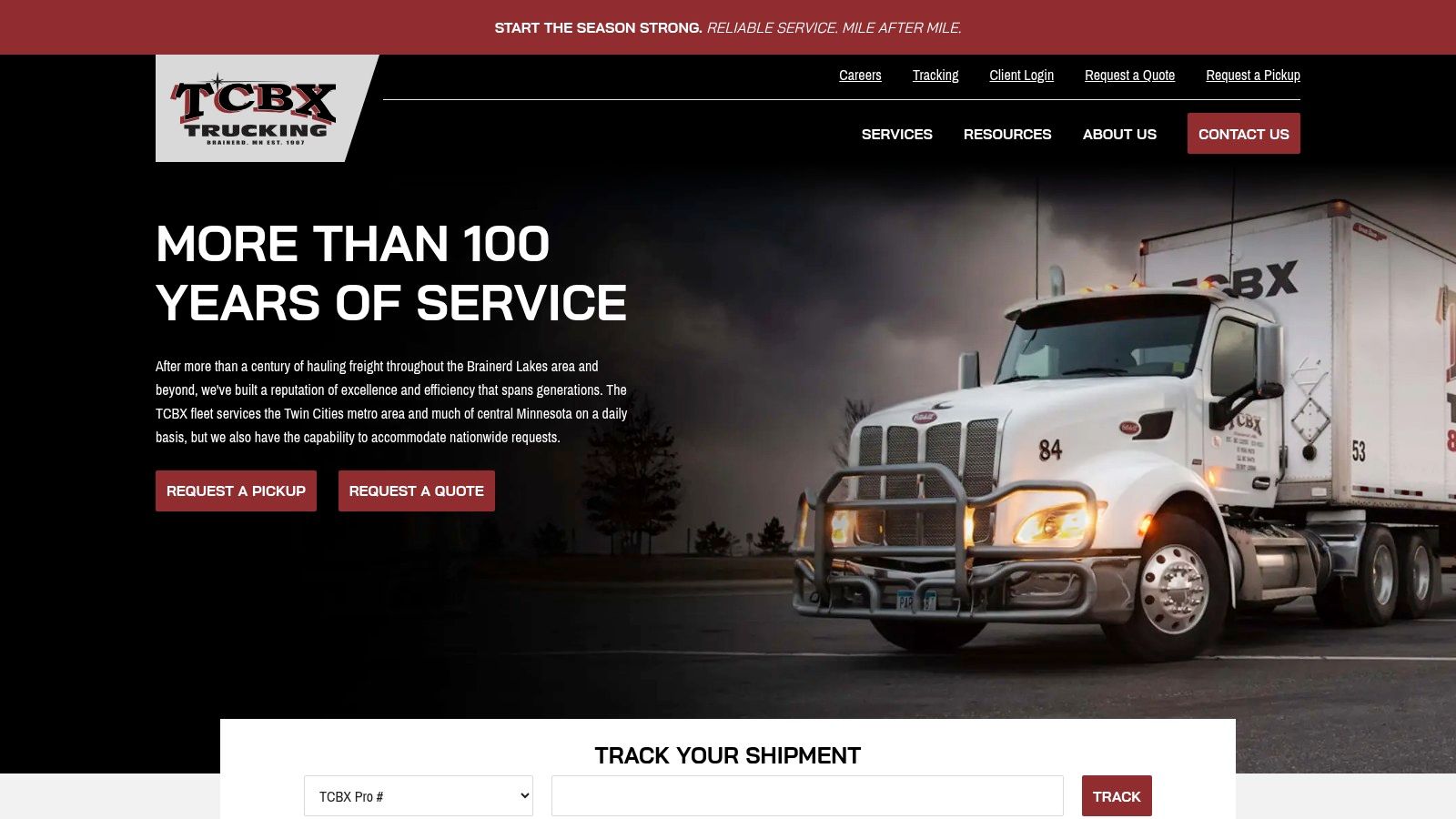
Where it falls short: direct LTL coverage is regional, so broader destinations lean on extended networks with less control, public pricing isn't listed, and the main address is in Brainerd rather than Minneapolis, which affects pickup logistics for metro shippers.
6. D & A Truck Line
Long regional lanes and East Coast over-the-road freight bring a different risk set than a metro loop. D & A Truck Line runs LTL from Minneapolis into southern Minnesota, regional service across Minnesota, Illinois, Iowa, Wisconsin, and South Dakota, and over-the-road freight to the East Coast and Southeast. The company has operated since 1959, which is a meaningful tenure in a business where carriers churn.
Why parking shows up in your on-time numbers
Driver hours are legal limits, and a driver who can't park legally loses that time. MnDOT's freight executive summary reports that 98% of truck drivers struggle to find safe and sufficient parking, while 58% report parking in unauthorized locations at least three times per week. That's not a driver-habit problem. It's a schedule risk that eventually appears as a late arrival on your dock.
- Build recovery into appointments: a tight delivery window on a long lane assumes the driver finds parking without hunting.
- Ask how detention is handled: who logs it, who approves it, and when it shows up as an accessorial charge.
- Confirm the escalation path: who takes the call at 2 a.m. when a corridor closes, and what they're authorized to change.
Where it falls short: headquarters are in New Ulm rather than Minneapolis, public information on equipment and scheduled service is thin, and pricing plus current lane availability require a direct call. The Minnesota Trucking Association's member resources are a reasonable place to verify a carrier's standing before you tender freight.
7. Bay & Bay Transportation
A container just off the rail, or a load that has to hold a set temperature, is a different buy from a dry van. Bay & Bay, headquartered in Eagan, pairs asset-based trucking with logistics work: refrigerated and specialized trucking, intermodal container capacity, and project support that includes cross-docking and warehousing. For temperature-controlled freight or a box moving off the rails, that mix covers lanes a pure truck carrier does not.
The shipment problem it fits is specialized and intermodal freight, not local same-day cartage. A reefer, a project move, or a container handoff belongs here. A short metro dry tender does not.
Reading driver pay correctly
Wage data gets misused when carriers are compared on driver cost. Minnesota DEED occupation data lists roughly 20,430 heavy and tractor-trailer truck-driver jobs in the Minneapolis-St. Paul-Bloomington metro at a median of $31.55 per hour in first-quarter 2026. That figure is the heavy and tractor-trailer class only. A box-truck or local delivery seat in the same metro is a different occupation, so that hourly rate is not what a Bay & Bay tractor or specialized seat pays.
Practical rule: benchmark pay inside the right vehicle class. A box-truck or delivery role and a tractor-trailer seat in the same metro are not interchangeable, and quoting one rate against the other produces bad comparisons and worse job offers.
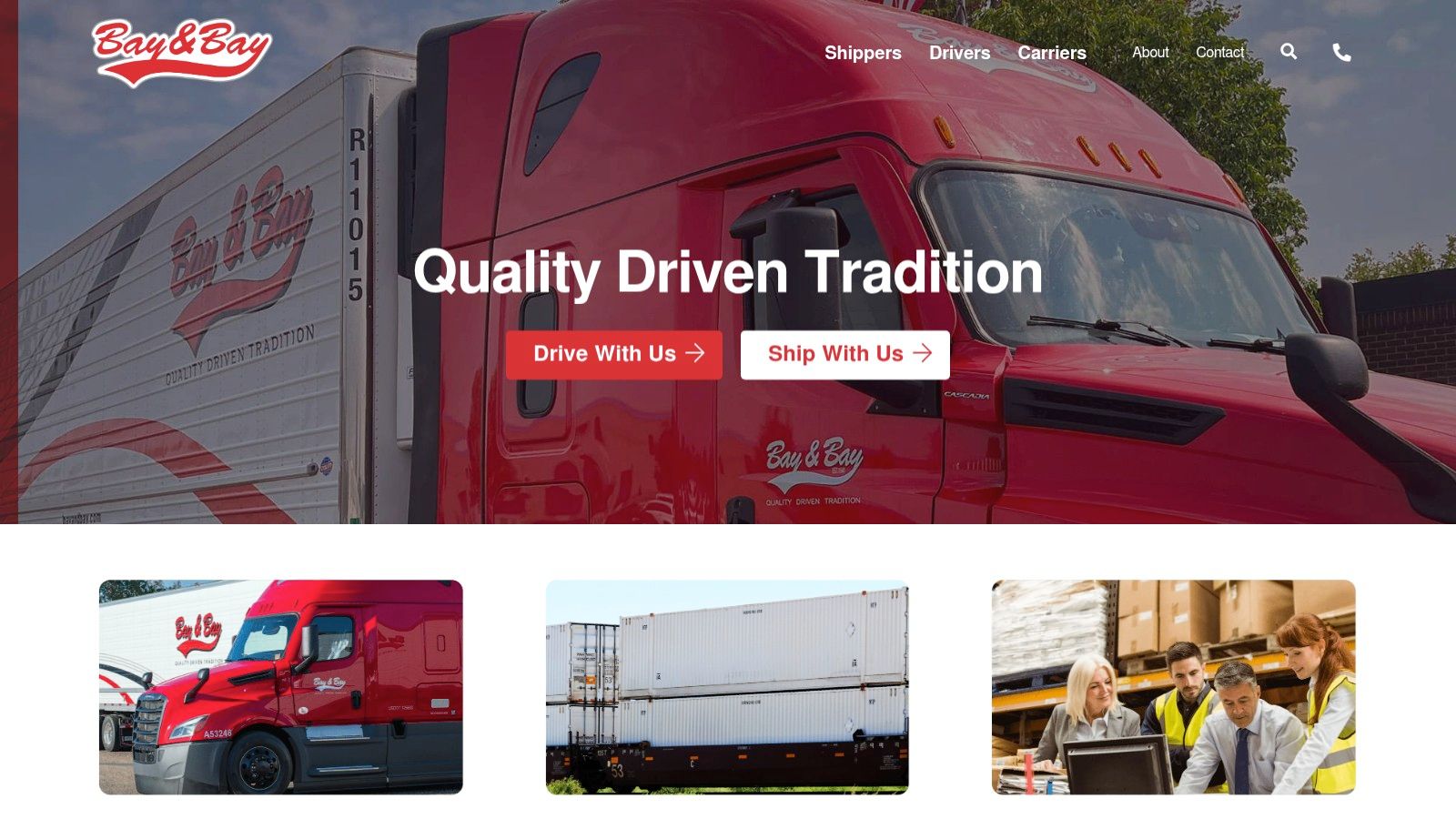
Where it falls short: the service list is broader than a shipper with metro cartage will use, and both price and capacity come back as a quote rather than a posted rate. Drivers looking at an opening should confirm the schedule and whether the seat is W-2 or contractor. The company page does not settle that for a specific job.
How the Minneapolis trucking companies compare by freight type, coverage, and pricing
| Item | Freight Type | Coverage | Pricing | Best For |
|---|---|---|---|---|
| Peak Transport | Scheduled middle-mile box-truck routes | Twin Cities and surrounding Minnesota areas | Freight rates not published | Predictable overnight facility-to-facility freight |
| A&H Cartage | LTL and full truckload dry van; airport freight | Twin Cities and regional area | Quote-based; no public tariff | Metro shipments needing airport handling, cross-docking, or storage |
| Old Dominion Freight Line | Regional and national LTL, plus expedited and truckload options | Twin Cities and nationwide | Quote required | Businesses shipping LTL beyond Minnesota |
| Driver Driven Transportation | Truckload, LTL, flatbed, Conestoga, and blanket-wrap | Twin Cities and nationwide | Prices not published | Freight needing local cartage and broader transportation options |
| TCBX Trucking | Regional LTL and truckload | Twin Cities, central and northern Minnesota, with extended-network shipping | Public pricing not listed | Regional Minnesota lanes, including overnight LTL |
| D & A Truck Line | LTL and over-the-road freight | Minnesota, nearby states, East Coast, and Southeast | Direct inquiry required | Shippers with Minnesota, Midwest, or longer-distance lanes |
| Bay & Bay Transportation | Refrigerated, specialized, intermodal, and logistics services | Nationwide | Quote-based | Specialized freight and broader supply-chain needs |
Matching Your Freight to the Right Minneapolis Carrier
Start by classifying each shipment instead of each carrier. Four buckets do most of the work: same-day metro cartage, regional LTL beyond the metro, statewide or Midwest truck lanes, and specialized or intermodal freight. A pallet crossing the metro by 9 a.m. belongs in the first bucket. A load for Duluth belongs in the third. A reefer move or a container off the rail belongs in the fourth. Once the bucket is clear, the shortlist writes itself.
Then shortlist two carriers per category, not one. Single-source arrangements look efficient until a truck breaks down or a facility rejects a load, and the second carrier is the difference between a recovery move and a missed promise to your customer.
- Get quotes in writing with accessorials itemized: liftgate, inside delivery, residential, appointment fees, detention, and reconsignment. A cheap line-haul rate with expensive accessorials is the most common way shippers overpay.
- Confirm the transit window and the tracking method: a quoted transit time means nothing without a tracking mechanism and a named contact when the load goes sideways.
- Test one lane before committing volume: tender a single repeatable lane for two weeks and measure on-time arrival, dwell at each stop, and communication quality.
- Check authority and safety standing: insurance certificates and operating authority take minutes to verify and save months of trouble.
For shippers running predictable overnight lanes inside the metro, box-truck middle-mile capacity is worth pricing separately from broader LTL. A scheduled route between facilities usually costs less to operate than a general LTL move with terminal handling on both ends, and it gives you a fixed departure and arrival window you can plan your dock labor around. That's the case where a dedicated middle-mile provider, W-2 driver model included, fits better than a national network. Match the carrier to the lane, and most of the service problems you've been managing disappear before they start.
If your freight runs predictable overnight lanes between Twin Cities distribution centers and hubs, Peak Transport builds box-truck middle-mile routes around those schedules instead of improvising them, with data-informed route optimization and documented handoffs at every facility. Drivers are W-2 employees with paid training, paid sick time, health insurance options, a 401(k) match, and posted starting pay of $25.75 to $28 per hour. Visit Peak Transport to see current metro lanes and open driver positions across Minneapolis, St. Paul, Brooklyn Park, Shakopee, Woodbury, and Eagan.