Box Truck Routes for Amazon: Operational Blueprint
Explore what box truck routes for Amazon actually look like, from overnight scheduling to compliance. A practical guide for logistics managers and drivers.
September 20, 2026
If you're looking at box truck routes for Amazon from the outside, the work can seem simple. A load appears, a truck shows up, freight moves, and the driver heads home. That version exists mostly on job boards and in recruiting copy.
The job lives in the gaps between those steps. It lives at the dock when a truck is the right size on paper but wrong for the building. It lives in the dispatch window when a lane looks short enough until a late departure pushes the driver into a compliance problem. It lives in the employment model when a route pays fine for a month, then turns unstable because the operator built it around hustle instead of structure.
That's why sustainable box truck routes for Amazon have to be engineered. Getting access to freight is one problem. Building an operation that can run those lanes night after night without burning out drivers, missing handoffs, or getting trapped by compliance failures is a different one.
The Hidden Engine of Amazon Logistics
At 2:00 AM, the middle mile is wide awake. A box truck backs off a dock, paperwork is already squared away, straps are checked, and the route has almost no room for improvisation. If that truck misses a handoff, the problem doesn't stay in one building. It rolls downstream into sortation timing, station readiness, and final delivery commitments.
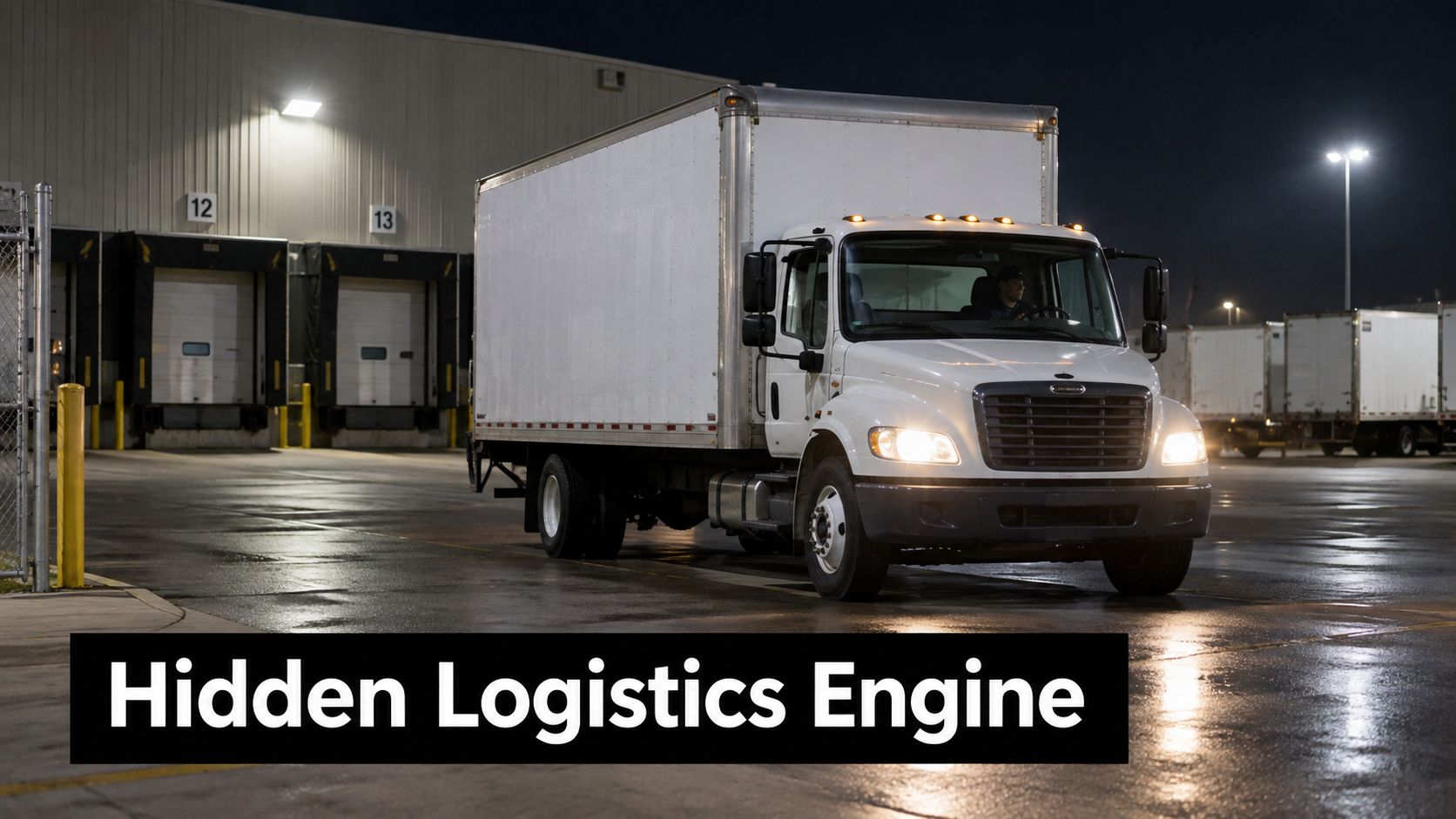
That's the piece many people miss. These routes usually aren't the last van to the customer's door. They sit in the middle mile, moving freight between fulfillment centers, sortation points, relay nodes, and regional hubs. Amazon's delivery network has operated at enormous speed and scale, with more than 7 billion units delivered to Prime members globally in 2023, including more than 4 billion in the U.S. and more than 2 billion in Europe, according to Amazon's 2024 delivery speed update. The same update says Amazon had surpassed 13 billion same-day deliveries by 2025, which the company presented as part of its continuing network expansion.
Why the middle mile feels different
A final-mile driver can sometimes recover with hustle. A middle-mile operation usually can't. The freight has to hit the next node inside a time window that supports the next sort, the next departure, and the next labor plan.
That changes how you think about route quality:
- Repeatability matters more than novelty. A lane that runs cleanly every night is worth more than a route that looks profitable but keeps slipping.
- Facility timing matters as much as road time. Dispatchers who only plan drive miles usually create rework.
- Driver hours are part of route design. They aren't something you sort out after the load is booked.
Practical rule: In middle-mile box truck work, the route starts at the first gate instruction, not when the wheels hit the highway.
Why Amazon box truck work is so structured
Amazon-linked box truck routes tend to cluster in dense metros because rapid fulfillment depends on short-haul transfers between major nodes. That's why overnight lanes often look boring on a map and demanding in practice. They aren't built to entertain a driver. They're built to protect network timing.
When operators understand that, their planning improves fast. They stop chasing miles alone and start managing handoffs, dwell, and recoverability.
Understanding Lane Structures and Overnight Schedules
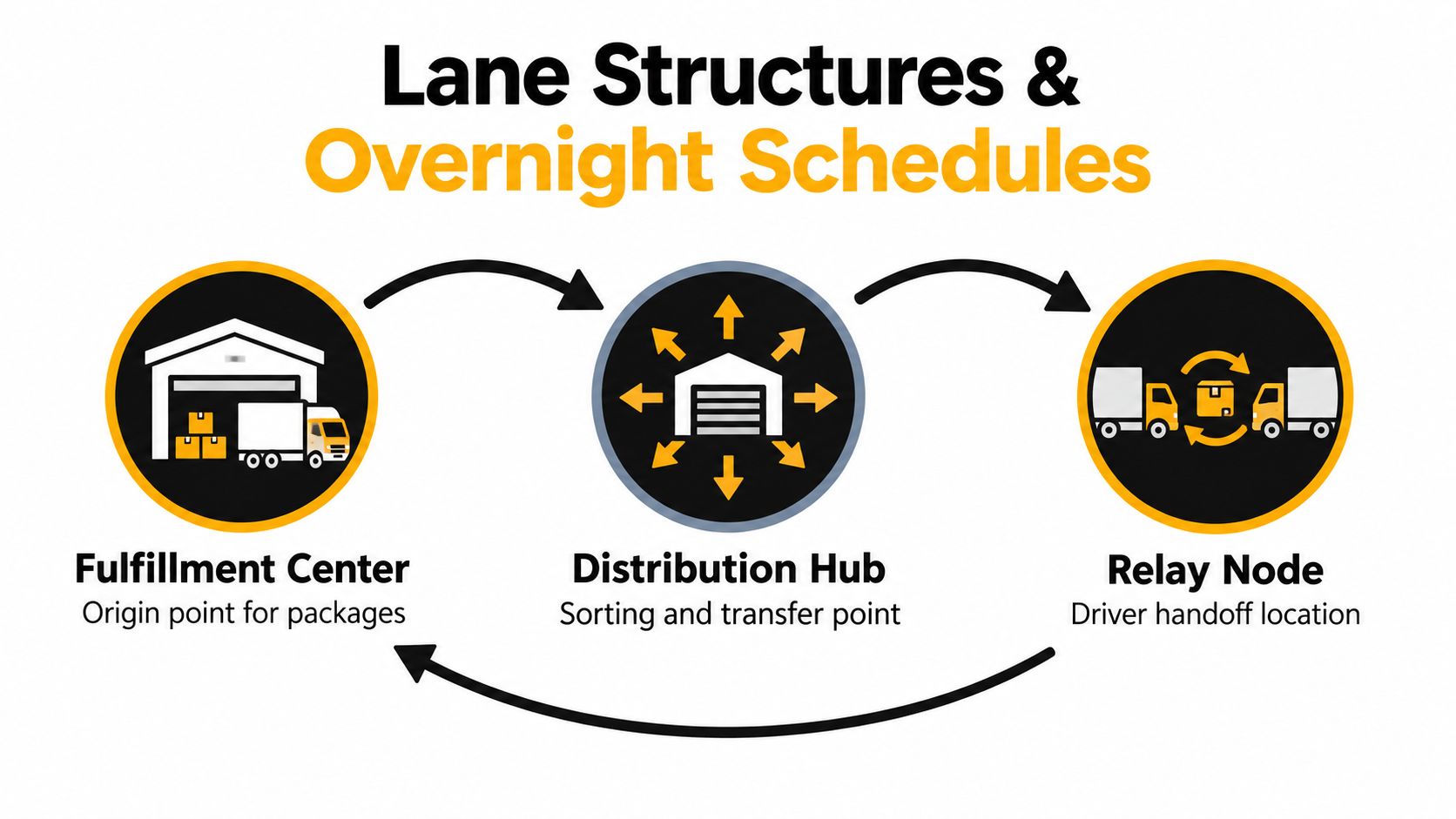
Most Amazon box truck lanes aren't long-haul adventures. They're regional loops and short-haul transfers designed to feed a tightly timed network before sunrise. A route might start at a fulfillment center, move to a hub for transfer, then finish at a relay or delivery-support node. Another lane might repeat the same two facilities all week with almost no variation except volume and dwell.
What the lane usually looks like
The cleanest overnight structures share a few traits:
- Tight node-to-node movement. Freight moves between known buildings with defined receiving behavior.
- Early handoff discipline. The route is built backward from when the next building needs the load.
- Low tolerance for drift. A small delay at origin can ruin the whole sequence.
That's why dispatch teams need to think in terms of departure control, arrival windows, dock readiness, and relief options. The schedule is the product.
Why geography alone is a bad planner
A lane can look efficient on a map and still fail operationally. The shortest drive isn't always the best route if the truck arrives at a facility with a bad dock sequence, a tight access rule, or a receiving window that doesn't flex.
Independent middle-mile guidance makes this point clearly. Time-window compliance and driver-hours protection have to be treated as hard constraints, and route engines should optimize mileage only after the route is feasible. AWS's example of middle-mile route optimization, summarized in Peak Transport's route-planning article, describes optimization that considers order volume, delivery windows, and vehicle capacity at the same time.
A good overnight route isn't the one with the fewest miles. It's the one that still works after a late trailer release, a crowded yard, or a slow unload.
The overnight rhythm that actually holds up
In stable middle-mile networks, dispatch usually works backward from the receiving deadline and then locks in:
- Departure discipline at the origin facility.
- Transit buffer that accounts for normal overnight friction.
- Facility-specific handling time at the destination.
- Driver-hour protection in case the lane gets ugly.
Teams that want fewer avoidable failures usually formalize that planning cadence instead of relying on memory. A structured dispatch scheduling workflow helps because everyone sees the same expectations before the truck ever leaves the yard.
The strongest overnight schedules are the ones that look almost boring on paper. That's usually a compliment.
Navigating Compliance and Equipment Requirements
Amazon Relay box truck work isn't casual spot freight with a logo attached. It's a compliance-heavy operating environment with strict entry rules, equipment fit requirements, and handling expectations that shape whether a carrier can run the load at all.
What has to be in place before the route matters
According to the Amazon Relay FAQ, carriers must have a DOT number with interstate authority active for at least 180 days, a valid MC number, and an FMCSA safety rating of Satisfactory, None, or Not Rated. Amazon also requires major insurance minimums, including $1,000,000 in auto liability and $100,000 in cargo coverage.
Those requirements matter operationally, not just administratively. If your authority, safety standing, or insurance structure is weak, you don't have a route problem. You have an eligibility problem.
For teams reviewing policy limits or trying to understand how those requirements fit into broader risk management, a practical primer on commercial truck coverage PT can help frame what these insurance layers do in day-to-day operations.
Amazon Relay box truck requirements
| Requirement Category | Specific Standard |
|---|---|
| Carrier authority | DOT number with interstate authority active for at least 180 days |
| Operating authority | Valid MC number |
| Safety status | FMCSA rating of Satisfactory, None, or Not Rated |
| Vehicle type | 26-foot or 16-foot box truck |
| Equipment setup | Dock-height straight truck with a functional tuck-under lift gate |
| Insurance | $1,000,000 auto liability and $100,000 cargo coverage |
| On-site handling | Driver must have a pallet jack and load straps, and handle loading and unloading |
Equipment fit is more technical than most articles admit
Amazon states on the main Amazon Relay site that box-truck freight is built around dock-height straight trucks, specifically 16-foot and 26-foot units with a functional tuck-under lift gate. That sounds straightforward until the truck reaches a facility where access, turning room, dock configuration, and unloading procedure all matter just as much as the truck length.
Weak operators lose money. They evaluate the lane as a drive. Experienced operators evaluate it as a chain of facility-access events.
- Truck spec has to match the building. If the equipment can't complete the transfer cleanly, the route isn't viable.
- Lift-gate time affects the schedule. Every cycle adds handling time and changes your margin for delay.
- Cargo vans aren't interchangeable. Amazon says cargo vans can't be used for these loads, which tells you how standardized the expectation is.
Field note: If dispatch doesn't document gate entry, dock instructions, and unloading method, the same mistake tends to repeat with a different driver.
Compliance systems that reduce friction
The practical fix is simple, even if the work isn't. Build a standard pre-dispatch checklist, maintain facility notes, and keep your documentation current. Carriers that want cleaner execution usually pair that with recurring safety and compliance procedures so the office and the driver are working from the same playbook.
The best-run Amazon box truck operations don't treat compliance as a startup hurdle. They treat it as route architecture.
Contractors vs W-2 Employment Finding Your Path
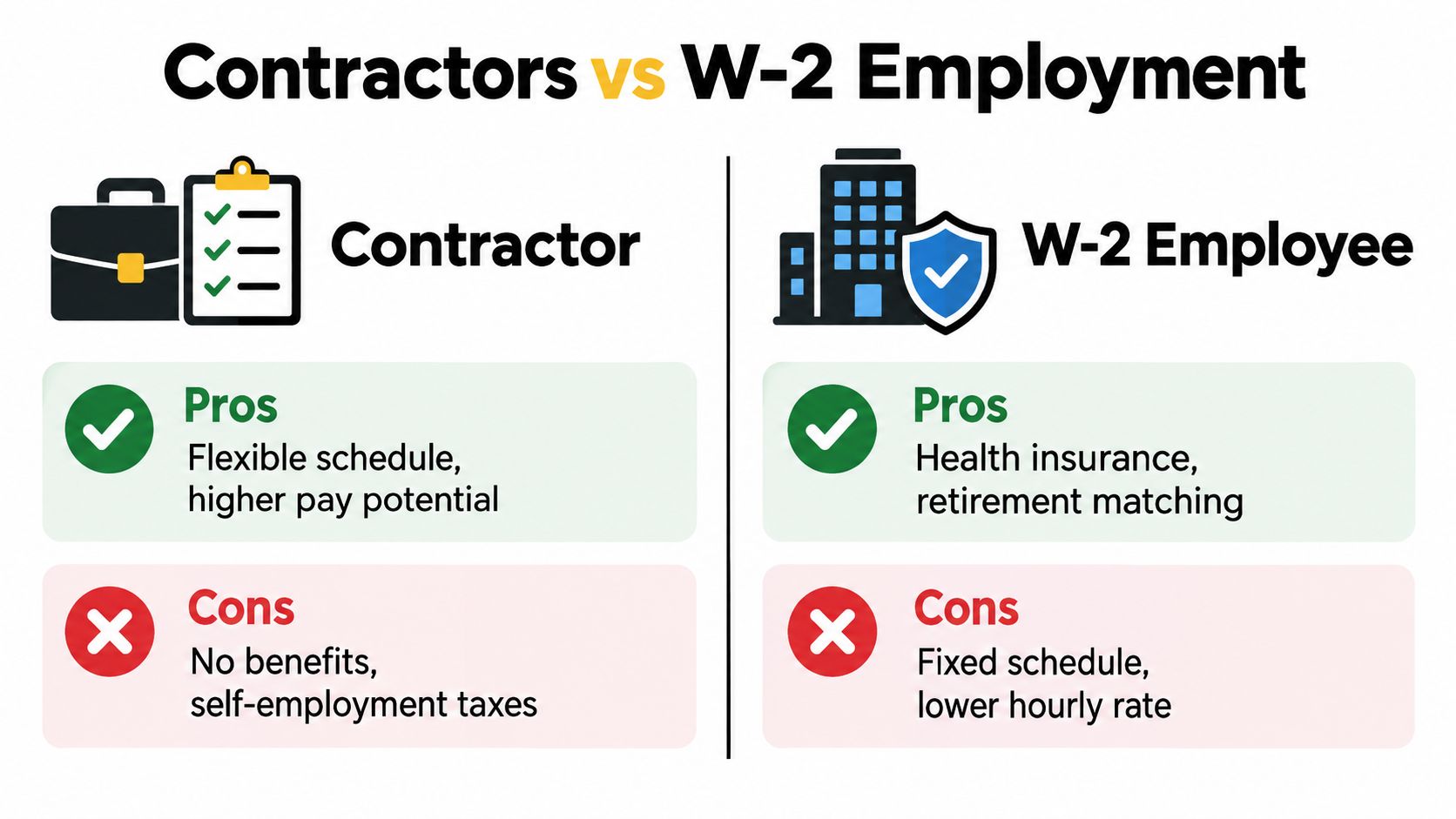
The freight can be the same, the truck can be the same, and the night can feel completely different depending on whether you're running as an independent contractor or as a W-2 employee. That choice shapes cash flow, schedule control, benefits, taxes, and how much operational risk lands on your back.
What contractors usually gain and lose
Contracting appeals to drivers who want flexibility or want to build a fleet over time. You may control more of your own decisions, choose which opportunities to pursue, and structure the business around your own appetite for risk.
The trade-off is that you also absorb the instability. Insurance, maintenance exposure, taxes, downtime, and load selection discipline stop being somebody else's problem. They become your operating model.
What W-2 drivers usually gain and give up
W-2 employment tends to make more sense for drivers who want consistency. The route may be less flexible, but the work is often easier to plan around because the lane structure, schedule, and dispatch expectations are already built.
That matters in overnight middle-mile work, where fatigue and unpredictability compound quickly. A driver who wants stable weekly rhythm often values clean dispatch, maintained equipment, paid training, and benefits more than theoretical freedom.
W-2 employment vs independent contracting
| Feature | W-2 Employment | Independent Contracting |
|---|---|---|
| Schedule structure | Usually more fixed and predictable | Usually more flexible but less stable |
| Benefits | May include health coverage, paid time off, and retirement options | Typically self-managed |
| Taxes | Withholding handled through payroll | Self-employment tax planning falls on the contractor |
| Equipment responsibility | Often employer-managed | Often owner-managed or leased by contractor |
| Dispatch control | Company-directed lanes and procedures | More autonomy, but more planning burden |
| Income volatility | Often steadier | Often tied to lane selection and downtime |
Some drivers don't need maximum flexibility. They need a route that starts on time, ends predictably, and doesn't leave them fighting for the next week's work.
For people evaluating middle-mile jobs specifically, it helps to compare actual route models rather than generic trucking advice. This breakdown of Amazon Relay driver jobs is useful because it focuses on what the work looks like in practice instead of treating every driving role as interchangeable.
A lot of experienced drivers eventually realize they're not choosing between “freedom” and “employment.” They're choosing which problems they want to own.
The Peak Transport Case Study Routing in the Twin Cities
A Twin Cities overnight route can look fine on paper at 6:00 p.m. and start breaking down by midnight. The drive time may still work. The shift may not. One slow dock, a missed gate instruction, or a late release at the first stop can push the rest of the run into hours-of-service pressure, missed appointment windows, and expensive rework.
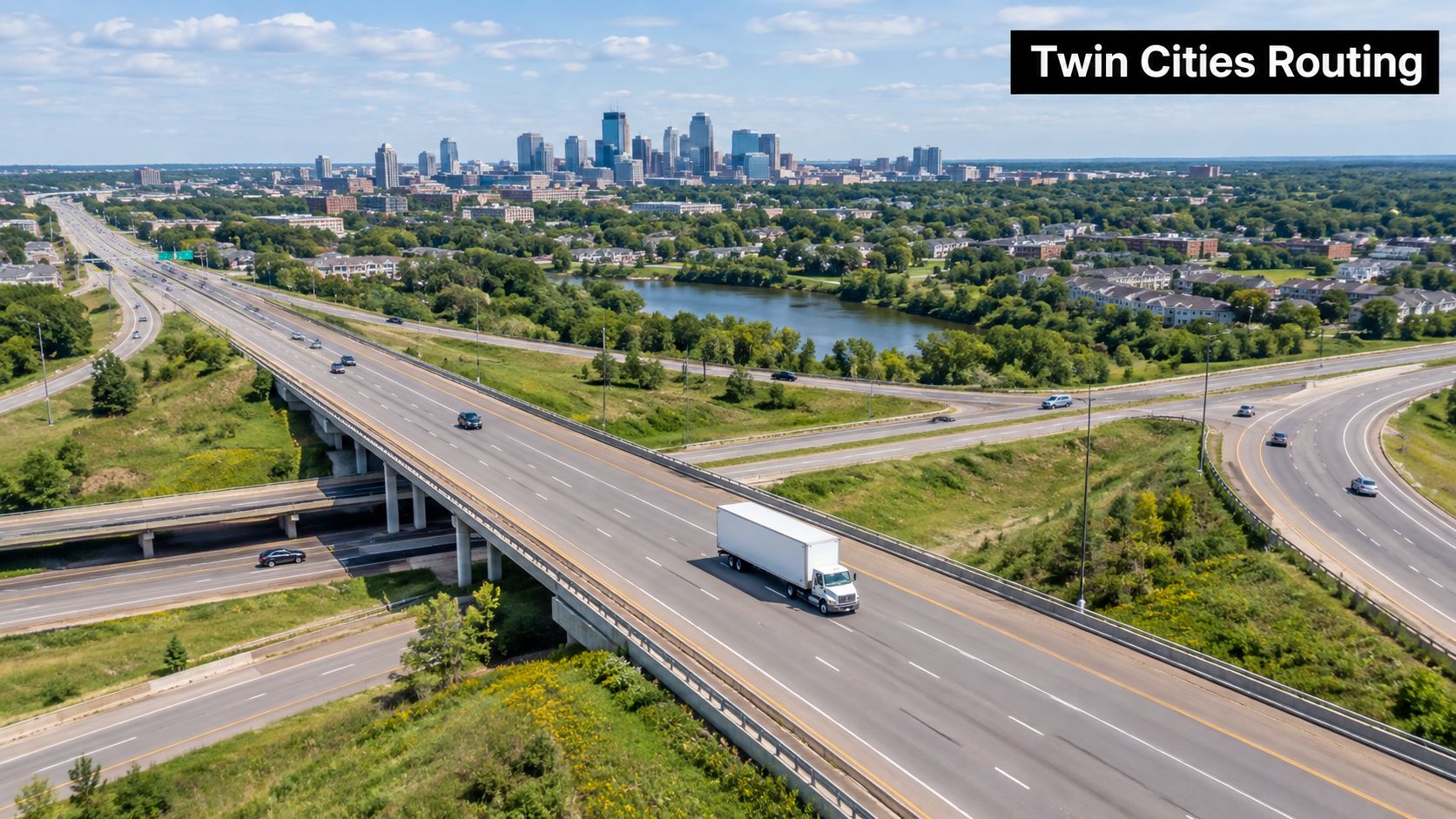
That is why the Twin Cities make a useful case study. The market is compact enough to run repeatable overnight patterns, but busy enough to expose weak operating habits fast. In Minneapolis and St. Paul, sustainable box truck work depends less on headline mileage and more on what happens at each handoff point between regional hubs, relay-connected facilities, and final return legs.
Public Amazon materials support that operating profile. In the Amazon Relay truck requirements article, Amazon describes local and regional box-truck routes, home-daily schedules, round trips up to 400 miles, and an opportunity pipeline that includes thousands of box-truck loads each day and more than 500,000 executed annually.
What disciplined routing looks like in this market
Good overnight planning in this market starts with facility behavior. A 22-mile leg into a well-run building can be easier to repeat than a shorter leg into a site with inconsistent check-in flow, limited dock space, or regular unload delays. Dispatchers who last in this segment build the lane around those realities first.
The route usually holds up when four controls are in place:
- Facility notes are specific. Drivers need gate sequence, dock side, contact process, parking limits, and unload expectations.
- Time windows are protected early. A plan that saves miles but burns appointment flexibility usually fails by the second stop.
- Replan triggers are defined in advance. If stop one slips by a set amount, dispatch already knows whether to hold, swap, or cut the next move.
- The lane is tested against the whole shift. Drive time matters, but dwell, check-in friction, fueling, and return timing decide whether the route can repeat.
That is the hidden architecture behind a route that drivers will want again next week.
A practical operating model
In a stable Twin Cities overnight operation, the route moves through a controlled sequence. Dispatch confirms equipment fit, verifies any handling tools, checks whether the driver can complete the run legally inside the shift, and sends stop-level instructions before the truck leaves the yard. That sounds basic. It is also where a lot of avoidable failures start.
Peak Transport applies that method in Twin Cities middle-mile box-truck operations running between regional hubs and Amazon Relay-connected facilities. The useful point is not the company name. It is the operating discipline. Clean documentation, repeatable departure standards, and clear exception handling give dispatch room to solve real problems instead of spending the night chasing preventable ones.
If a route only works on a quiet night with perfect timing, it was never built well enough.
Where operators usually lose the lane
The weak point is rarely the highway segment. It is the transition between segments. Entry delays, unclear dock assignments, poor load handoff notes, and bad assumptions about unload time can wipe out the margin that made the route look profitable.
That matters even more in overnight middle-mile work because box truck routes for Amazon are often judged by consistency, not one good save. A dispatcher can rescue a shift with calls and favors once in a while. Sustainable lanes come from standard work, documented site behavior, and route designs that still function when the night gets messy.
Key Takeaways for Drivers and Logistics Managers
The biggest mistake people make with box truck routes for Amazon is treating them like simple freight moves. They're not. They're structured middle-mile operations where dock access, equipment fit, route timing, and employment model all affect whether the work is sustainable.
For drivers, the lesson is straightforward:
- Know the route beyond the miles. Ask about dock conditions, handling expectations, and schedule consistency.
- Treat compliance as daily work. Authority, safety status, insurance, and documentation aren't back-office trivia.
- Choose your model carefully. Contractor freedom sounds good until you're carrying all the instability yourself.
For logistics managers, the priority is different:
- Engineer the lane. Don't rely on a map and a pickup time.
- Standardize facility notes. Drivers need usable instructions, not assumptions.
- Build around repeatability. Stable overnight performance comes from systems, not last-minute saves.
If you're a driver trying to move into better middle-mile work, your paperwork and presentation matter more than many people realize. A practical guide on how to build a standout delivery driver resume can help you show route discipline, safety habits, and equipment familiarity in a way employers care about.
The operators who last in this niche usually aren't the ones who chase every load. They're the ones who build routes that can survive ordinary friction without turning every night into a recovery exercise.
Peak Transport runs W-2 overnight box-truck routes across the Twin Cities, connecting Amazon-linked facilities and regional hubs with structured dispatch, paid training, and real schedule consistency. If you want middle-mile work that's built around compliance, predictable lanes, and respectful operations, visit Peak Transport.